
Strong Communities in Times of Disaster

In the face of the hurricanes, tropical cyclones and earthquakes and now wildfires that have devastated so many communities in the past two months it is easy to allow ourselves to be overwhelmed by human suffering. But, there is not only darkness; we find hope as we witness an upwelling of the latent nobility of the human spirit.
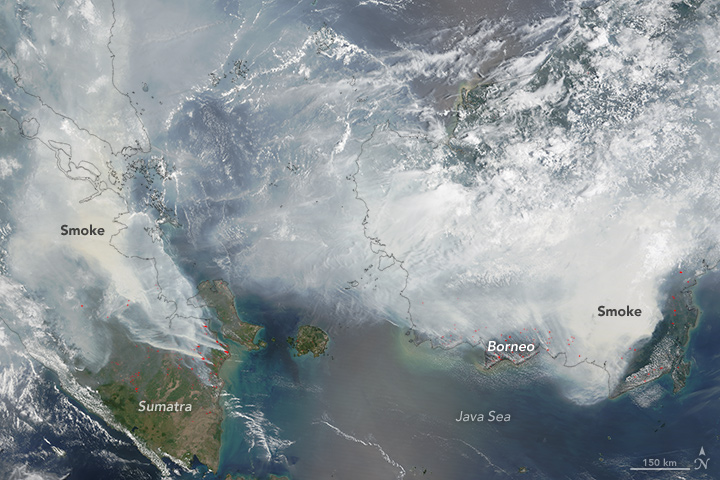
Seasonal fires occur in Kalimantan each year, peaking in the dry season of late summer and early fall. Slash-and-burn deforestation to clear land for farming or other agriculture still takes place, and fires escape from already cleared land into adjacent forest. The swampy forests of the low-lying parts of these islands sit on thick layers of peat (un-decayed vegetation), which is extremely flammable when it dries out. The peat is exceptionally smoky when it burns.
Seasonal forest fires occur in Kalimantan each year, peaking in the dry season of late summer and early fall. Slash-and-burn deforestation to clear land for farming or other agriculture still takes place, and fires escape from already cleared land into adjacent forest. The swampy forests of the low-lying parts of these islands sit on thick layers of peat (un-decayed vegetation), which is extremely flammable when it dries out. The peat is exceptionally smoky when it burns.

Continue reading

Disaster Relief Agencies for Hurricane Harvey

Many people have been contacting us to find out whether we are doing anything to send aid to those made homeless by Hurricane Harvey. SD USA is not a disaster relief organization,  but we are very happy to refer our members to organizations that do this work much more efficiently than we would be able to. Here are some links to disaster relief organizations now active in Texas and Louisiana.

You can see an updated list of organizations accepting monetary donations here.

Texas Voluntary Organizations Active in Disaster website for a list of vetted disaster relief organizations.

American Red Cross – You can donate directly to the American Red Cross to assist hurricane victims. Minimum online donation is $10. To donate visit redcross.org, call 1- 800-RED CROSS or text the word HARVEY to 90999 to make a $10 donation.

Salvation Army – Call 1-800-SAL-ARMY, go to the donate online or send your contribution, earmarked “Disaster Relief,” to The Salvation Army, 10755 Burt St, Omaha, NE 68114.

Catholic Charities USA – Donated funds go to support recovery efforts, including direct assistance, rebuilding and health care services. You can donate here.

Here is an excellent article by Episcopal Relief & Development on how we can help and what kind contribution is most helpful.

How does a Baby’s Brain Work?

The first year a baby’s brain needs love to develop. What happens in the first year is profound.

By Yudhijit Bhattacharjee Photographs by Lynn Johnson
NATIONAL GEOGRAPHIC, January 2015

In the late 1980s, when the crack cocaine epidemic was ravaging America’s cities, Hallam Hurt, a neonatologist in Philadelphia, worried about the damage being done to children born to addicted mothers. She and her colleagues, studying children from low-income families, compared four-year-olds who’d been exposed to the drug with those who hadn’t. They couldn’t find any significant differences. Instead, what they discovered was that in both groups the children’s IQs were much lower than average.

“These little children were coming in cute as buttons, and yet their IQs were, like, 82 and 83,” Hurt says. “Average IQ is 100. It was shocking.”

The revelation prompted the researchers to turn their focus from what differentiated the two groups toward what they had in common: being raised in poverty.

How does a Baby’s Brain Work? video from The National Geographic, Jan. 2015

The researchers found that children who received more attention and nurturing at home tended to have higher IQs. Children who were more cognitively stimulated performed better on language tasks, and those nurtured more warmly did better on memory tasks. The results demonstrated just how critically important an emotionally supportive environment is at a very young age.

Read the National Geographic article here as a PDF file.


Continue reading

Students breathe new life into the Glorietta at Atalanta

Joanna Dokson, San Luis Valley

Reprinted from The Rocky Mountain Region News

The Glorietta

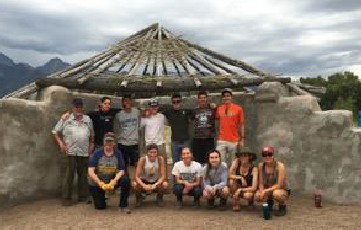
Joanna and volunteers run a community garden at Atalanta where members share in the products of the garden by either buying them or by bartering their work in the garden for the fruits and vegetables. The surplus goes to the needy in the Crestone area. And from Joanna: “We recently were blessed by having student service learning volunteers from Colorado College come to Atalanta to work on the glorietta, designed by Kelly Hart and built during the Vittachi Youth Educators Conference. They were a delight to work with and on the last night they all slept under the stars in the glorietta.  The glorietta is a lovely little storytelling, gathering, entertainment spot. It still needs a finish coat and more willows woven into the roof.

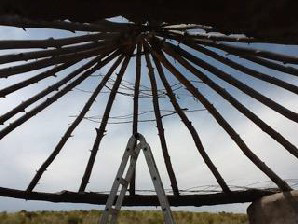
The Glorietta from the inside.

The students also reestablished paths, from the garden to the glorietta and from the garden to the medicine wheel established first by Thomas Banyaquia and then Lorraine Fox-Davis and Orville Looking Horse on the top of the Atalanta hill. Then they made a new trail from the glorietta to the top of the hill.

Our garden is looking great and has new members. We are fundraising on eBay with donated items and are having a garage sale next weekend in Alamosa. Our presentation at the National Congress in Indianapolis was small but the feedback very positive to have Subud build a regional/national facility on the Atalanta land. Also, SES and SICA just sent letters of support also to the regional and the national committees.”